
Forex Demo Trading for Beginners: 7 Simple Rules to Practise the Right Way (2026)
Written by Dinesh Verma, Founder of MonarkFX. Trading Indian, forex and crypto markets since 2021 and teaching price action and demand-supply to retail traders in West Delhi and online.
Almost every beginner I teach wants to skip demo trading. “Sir, demo mein toh sab profit hota hai, real mein alag hai.” They’re half right. Demo feels different from real money. But that’s exactly why most people use it wrongly, not why it’s useless.
Forex demo trading done properly is the cheapest training you’ll ever get. Done badly, it’s a video game that teaches you bad habits. This guide shows you how to use a demo account the way we use it with our students: with rules, a journal, a scorecard, and a clear test for when you’re ready to go live.

What Is Forex Demo Trading?
Table of Contents
Forex demo trading means placing trades on a practice account with virtual money, using real market prices. Nothing you win or lose is real, but the charts, timings and price moves are the same as the live market.
In India, you’ll trade currency pairs like USD/INR on NSE or BSE once you go live. Many SEBI-registered brokers offer paper trading, and you can also practise with TradingView’s paper trading feature on the same pairs you will trade later. Avoid “demo accounts” from offshore forex apps. They’re designed to get you to deposit on an unregulated platform, which is not allowed for Indian residents. You can check the RBI Alert List and verify brokers on the SEBI website.
Why Most People Waste Their Demo Account
- They trade 10x the size they’d ever use with real money.
- They take random trades without a setup.
- They reset the account after a big loss and forget it happened.
- They don’t keep a journal, so nothing is learned.
- They stop after one good week and rush to live trading.
If you do any of these, demo results mean nothing. Worse, you build habits that will cost you real money later.
7 Rules for Forex Demo Trading That Actually Works
- Use realistic capital. Set the demo balance to the amount you’ll actually trade with, say ₹50,000, not ₹10 lakh.
- Use the same position size you’d use live. One lot means one lot.
- Trade only one setup. For example, a pullback into a daily demand zone. Nothing else.
- Write the plan before entry: entry, stop loss, target and reason.
- Risk 1% per trade, even though the money is fake.
- Never reset the account. Losses stay on record.
- Journal every trade, including the ones you skipped and why.
What to Track in Your Demo Journal
| Column | Example |
|---|---|
| Date and time | 12 Sept, 10:20 am |
| Pair | USD/INR |
| Setup | Pullback to daily demand zone |
| Entry / Stop / Target | 83.95 / 83.88 / 84.10 |
| Risk in rupees | ₹500 (1%) |
| Result | +₹1,050 (target hit) |
| Rules followed? | Yes |
| Emotion | Calm, waited for confirmation |
The “rules followed?” column is the most important one. A winning trade where you broke a rule is still a mistake. A losing trade where you followed every rule is a good trade.

How Long Should Forex Demo Trading Last?
Not a fixed number of days. Use this test instead. You’re ready to try live trading when:
- You’ve completed at least 40 to 50 demo trades with the same setup.
- You followed your rules in at least 90% of them.
- Your maximum losing streak didn’t make you break your risk rules.
- Your overall result is positive or close to breakeven after costs.
For most of our students this takes six to ten weeks. Some take longer, and that’s fine.
Demo vs Live: What Changes
| Area | Demo account | Live account |
|---|---|---|
| Emotions | Calm, little fear | Fear and greed become real |
| Execution | Fills are usually perfect | Slippage and spread costs apply |
| Patience | Easy to wait | Harder, you want to “make it back” |
| Discipline | Easy to follow rules | Tested every single trade |
This is why your first live trades should be the smallest size possible. You’re not testing the strategy any more. You’re testing yourself.
Moving From Demo to Live: A Simple Plan
- Open an account with a SEBI-registered broker and activate the currency segment.
- Trade one lot only for your first 20 live trades.
- Keep the same journal and the same rules.
- Compare live results with demo after 20 trades.
- Increase size slowly only if your rule-following stays above 90%.
How Demo Trading Fits Into Forex Training
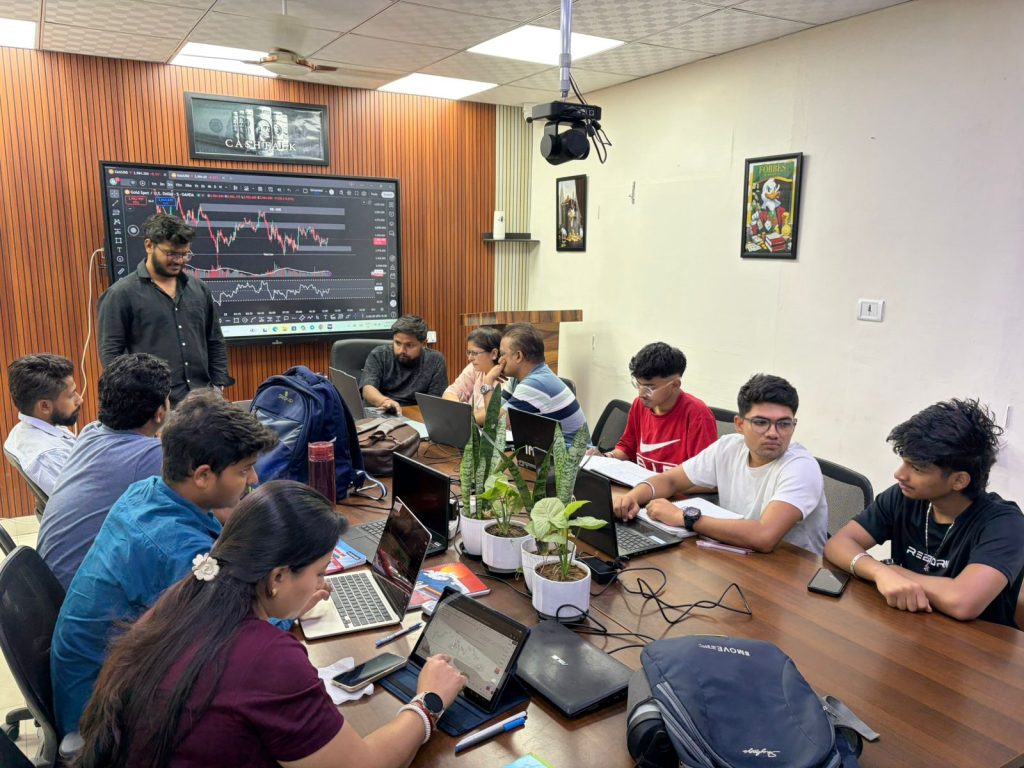
Forex demo trading is one stage in a bigger learning path. Before it, you need the basics and risk rules. After it, you need reviewed live trades. Our forex trading training for beginners roadmap shows where demo practice fits in, and our 90-day plan to learn forex trading at home gives you a day-by-day schedule.
If you want someone to review your demo journal, that’s exactly what we do in our forex trading course. You can see how in a free demo class.
Advanced Chart Concepts: SMC, ICT and Liquidity
Currency pairs like USD/INR and EUR/USD respect liquidity and order flow just like stocks. Once the basics are in place, our forex students also learn:
- Support and resistance and demand and supply zones as the base
- Liquidity: equal highs and lows, stop loss clusters and liquidity sweeps
- Smart Money Concepts (SMC): break of structure (BOS), change of character (CHoCH), order blocks and fair value gaps
- ICT ideas: premium and discount areas and session timing
- RSI divergence as confirmation at key zones, never as a standalone signal
These ideas are added in a fixed order so they sharpen your reading instead of cluttering the chart. Read more in our demand and supply trading course guide.
Frequently Asked Questions
Is forex demo trading useful for beginners?
Yes, if you trade with realistic capital, the same position size you would use live, one fixed setup and a journal. Used like a game, it teaches bad habits.
How long should I do forex demo trading?
Until you complete 40 to 50 trades with one setup, follow your rules in at least 90% of them, and handle losing streaks without breaking risk rules. For most beginners this takes six to ten weeks.
Where can I do forex demo trading in India?
Use paper trading from a SEBI-registered broker or TradingView paper trading on pairs like USD/INR. Avoid demo accounts from offshore forex apps, which are not permitted for Indian residents.
Why are demo results better than live results?
On demo, there is no fear or greed and fills are perfect. Live trading adds emotions, slippage and costs, so start live with the smallest size.
Should I reset my demo account after losses?
No. Keep every loss on record. Resetting hides the mistakes you need to learn from.
About the author: Dinesh Verma has traded Indian, forex and crypto markets since 2021 and runs MonarkFX, a trading education centre in West Delhi.
2 Comments