
Demand and Supply Trading Course: 7 Essential Skills and the Best Places to Learn in India (2026)
Written by Dinesh Verma, Founder of MonarkFX, Uttam Nagar, New Delhi. Trading Indian, forex and crypto markets since 2021 using demand and supply zones as the main method.
Most retail traders buy after a stock has already moved. They see a big green candle, feel they’re missing out, and enter near the top. Demand and supply trading flips that habit. You look for the area where big buyers stepped in earlier, and you wait for price to come back there.
It sounds simple. In practice, marking the right zone, judging whether it’s still fresh and placing a sensible stop takes training and a lot of chart time. This guide explains what a demand and supply trading course should teach, how to tell a good course from a weak one, and where you can learn it in India.
Quick Answer: What Is a Demand and Supply Trading Course?
Table of Contents
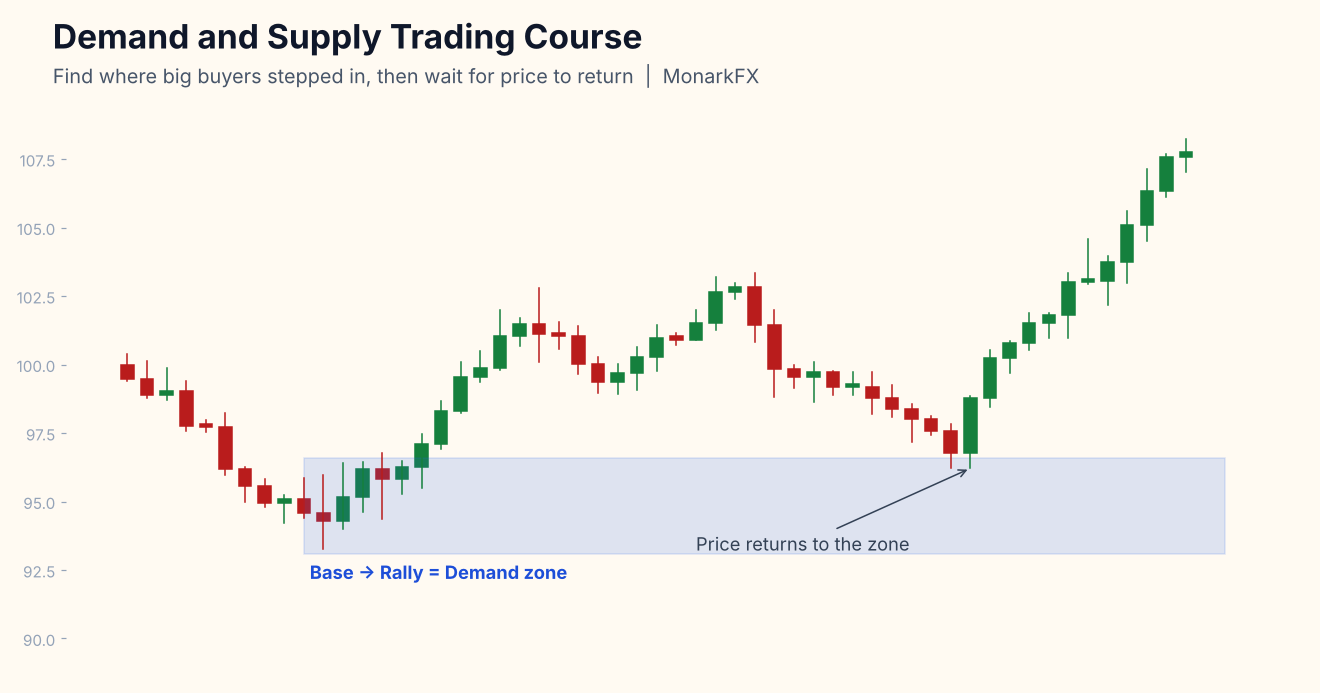
A demand and supply trading course teaches you to find price zones where large buyers (demand) or sellers (supply) placed big orders, and to trade when price returns to those zones. It covers zone formation patterns like rally-base-rally and drop-base-drop, zone strength and freshness, multi-timeframe confirmation, entry and stop loss rules, risk management and trading psychology, with lots of chart practice.
What Demand and Supply Trading Actually Means
Big institutions can’t buy their full quantity at one price without pushing the market up. So they often build positions in an area, and when their buying overpowers sellers, price shoots away. That area, the “base” before the sharp move, is a demand zone. If price comes back to it later, there’s a good chance unfilled orders are still waiting there.
A supply zone is the same idea in reverse: a base followed by a sharp fall.
| Pattern | What happens | Zone type |
|---|---|---|
| Rally-Base-Rally | Up move, pause, up move again | Demand (continuation) |
| Drop-Base-Rally | Down move, pause, sharp rally | Demand (reversal) |
| Drop-Base-Drop | Down move, pause, down move again | Supply (continuation) |
| Rally-Base-Drop | Up move, pause, sharp fall | Supply (reversal) |
What a Good Demand and Supply Trading Course Should Cover
1. Candle Reading
Base candles (small bodies) versus leg-out candles (big bodies). If you can’t tell the two apart quickly, you’ll draw zones everywhere.
2. Drawing Zones Correctly
- Where exactly to mark the top and bottom of a zone
- Why the strength of the move away from the zone matters
- How many times a zone can be tested before it weakens
- Fresh zones versus used zones
Smart Money Concepts (SMC), ICT and Liquidity
Demand and supply zones become much sharper when you understand liquidity. Big players often push price through obvious lows to trigger stop losses before the real move starts. Our course connects demand and supply with Smart Money Concepts:
- Liquidity: equal highs and lows, stop loss clusters and liquidity sweeps
- Market structure in SMC terms: break of structure (BOS) and change of character (CHoCH)
- Order blocks and fair value gaps (FVG), and how they line up with demand and supply zones
- ICT concepts: premium and discount areas, and why session timing matters
RSI Divergence as Confirmation
We keep indicators to a minimum, but RSI divergence works well as a second opinion. When price makes a new low but RSI makes a higher low, and this happens at a fresh demand zone, the setup gets stronger. Divergence on its own is never a reason to enter.
3. Multi-Timeframe Analysis
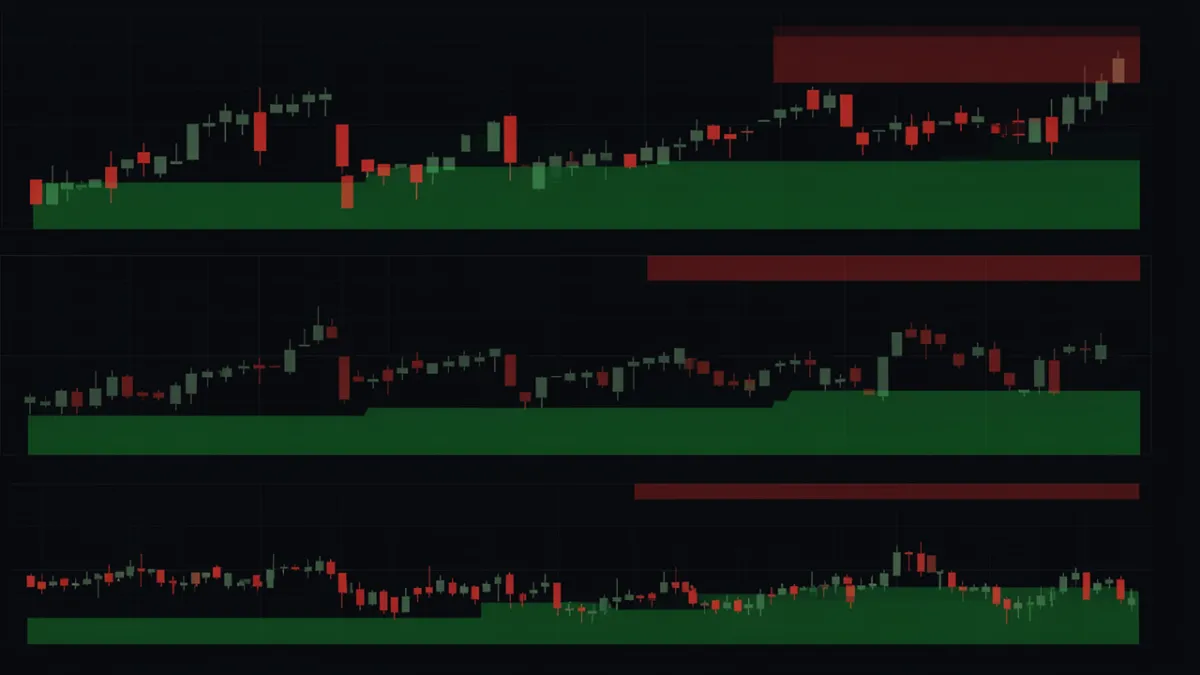
Weekly and daily charts for the big zones and trend. Hourly or 75-minute charts for entries. A small demand zone on a 15-minute chart inside a big daily supply zone is a trap, and a course should show you dozens of examples of this.
4. Trend and Location
Buying at demand works best in an uptrend and when the zone sits far below the current supply. Location on the bigger chart decides whether a zone is worth trading at all.
5. Entry, Stop Loss and Target
- Entry at the zone with a planned order, not by chasing
- Stop loss just beyond the zone
- Target at the next opposing zone
- Skipping trades where the risk to reward is poor
6. Risk Management and Position Sizing
Risk 1% of capital per trade while learning, and size the position from the stop loss distance. Zones fail sometimes. Risk rules make sure a failed zone is a small loss, not a disaster.
7. Trading Psychology and Journaling

Waiting for price to come back to your zone takes patience. Many students mark a perfect zone and then enter early because waiting feels uncomfortable. A journal shows you how often you do this.
Signs of a Weak Demand and Supply Course
- Only a few example charts, all of them winners.
- No explanation of why zones fail.
- No multi-timeframe work.
- Promises like “95% accurate zones”.
- Paid tips or zone alerts sold alongside the course.
According to a SEBI study, around 9 out of 10 individual F&O traders lost money in FY25. No method, including demand and supply, removes risk. Be careful of anyone who says otherwise.
Where to Learn Demand and Supply Trading in India
1. NiftyNitesh.com (Online, Self-Paced)
NiftyNitesh.com is an online stock market education platform focused on demand and supply and institutional trading concepts. It covers candle formation, demand and supply zones, timeframes, trend, sector analysis and trading psychology, with a swing trading focus. There’s a free YouTube channel for Nifty and Bank Nifty zone analysis and paid mentorship for people who want guided learning. A good option if you want to learn online at your own pace.
2. MonarkFX, Uttam Nagar, Delhi (Classroom and Online)
At MonarkFX we teach demand and supply as the core of our price action programme, with live chart sessions during market hours, paper trading before real money and weekly journal reviews. Classes run at our Uttam Nagar centre near the Blue Line metro and live online. See our price action trading course in Delhi for the full chart-reading syllabus, and our option trading course in Delhi for applying zones to derivatives.
3. Self-Study
You can learn the basics from free material and practice on TradingView. It takes longer, and you’ll need a strict journal to check your own zones. Our guide on how to learn the stock market gives a step-by-step order.
How to Choose the Right Course
- Ask the mentor to mark zones on a live chart in front of you.
- Ask to see a failed zone and why it failed.
- Check that risk management is part of every lesson.
- Make sure there’s practice and review, not just videos.
- Get fees and refund terms in writing.
For a broader checklist, read how to choose the best stock market institute in Delhi.
If you are still deciding where to study, compare options with our guide to the best trading institute in West Delhi, or start with a stock market course for beginners in Uttam Nagar. Planning to trade intraday with zones? Read is intraday trading safe for beginners first. The same demand and supply logic also works in currency markets, which we cover in our guide to the best forex trading classes.
Who Should Learn Demand and Supply Trading
- Beginners who want a clear, rule-based way to read charts
- Swing traders who prefer fewer, planned trades
- Option traders who want better entries on Nifty and Bank Nifty
- Traders tired of indicator clutter
Try a Free Demo Class

If you’re in Delhi, the easiest way to see demand and supply trading in action is a free demo class at MonarkFX. We’ll mark zones on a live chart and you can ask anything. For fees and batches, call +91-8750475852 or see stock market classes in Delhi.
Frequently Asked Questions
What is taught in a demand and supply trading course?
Candle reading, zone patterns like rally-base-rally and drop-base-rally, drawing and grading zones, multi-timeframe analysis, entry and stop loss rules, risk management and trading psychology, with chart practice.
Is demand and supply trading good for beginners?
Yes. It gives beginners a clear, rule-based way to read charts. It needs practice to mark zones correctly, so paper trading and reviews are important.
Does demand and supply trading work in options?
Yes. Zones on the Nifty or Bank Nifty chart can be used to plan option trades, but options add time decay and volatility, so risk rules matter even more.
How long does it take to learn demand and supply trading?
Most traders need two to three months to understand the method and a few more months of practice before marking zones with confidence.
About the author: Dinesh Verma has traded Indian, forex and crypto markets since 2021 and runs MonarkFX in Uttam Nagar, West Delhi. This article is for education only, not investment advice.