
Forex Trading Training for Beginners: An Easy 6-Stage Roadmap That Works (2026)
Written by Dinesh Verma, Founder of MonarkFX. Trading Indian, forex and crypto markets since 2021 and teaching price action and demand-supply to retail traders in West Delhi and online.
Most beginners who come to me have already “learned” forex. They have watched 200 videos, tried three indicators and blown one small account. What they never had was forex trading training in the right order. That is the gap this guide fills.
Below is the same six-stage path we use with new students at MonarkFX. It is written for complete beginners in India who want to learn properly, legally and without burning money in the first month.
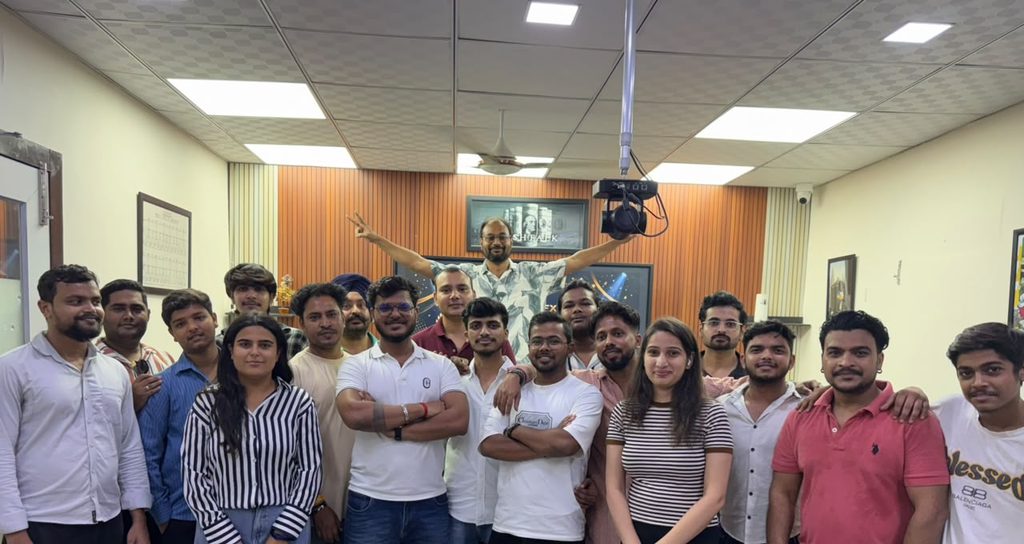
What Forex Trading Training for Beginners Really Means
Table of Contents
Forex trading training is different from reading about forex. Reading gives you information. Training builds a skill through practice, mistakes and correction. Think of learning to drive. You can read the whole manual, but you only learn when someone sits next to you and says “brake, abhi”.
Good forex trading training for beginners has three parts: a fixed order of topics, a lot of practice on demo, and someone who reviews your trades and tells you what you did wrong.
Why Beginners Need a Fixed Order
The most common pattern I see: a beginner learns RSI on Monday, Elliott waves on Wednesday, a “secret scalping trick” on Friday, and by the weekend has no idea which one to trust. Nothing builds on anything else.
Skills stack. You can’t place a sensible stop loss if you don’t understand market structure. You can’t size a position if you don’t know what a pip is worth. So the order matters as much as the content.
The 6-Stage Forex Trading Training Roadmap
Stage 1: Market Basics (Week 1 to 2)
- Currency pairs, base and quote currency
- Pips, lots and contract sizes on Indian exchanges
- Bid, ask and spread
- Market sessions: Asian, London, New York, and how they affect INR pairs
Don’t rush this. Students who skip basics keep making silly sizing errors months later.
Stage 2: Legal Rules in India (Week 2)
For Indian residents, forex trading is allowed only in permitted pairs on recognised exchanges like NSE and BSE, through a SEBI-registered broker. That includes USD/INR, EUR/INR, GBP/INR, JPY/INR and a few cross pairs such as EUR/USD, GBP/USD and USD/JPY. Leveraged trading on offshore apps is not allowed under FEMA, and the RBI publishes an Alert List of unauthorised platforms. You can verify a broker on the SEBI website.
We teach this in week two, not at the end, because many beginners open an offshore account within days of starting.
Stage 3: Risk Management Before Strategy (Week 3 to 4)
Yes, before strategy. Here is why: a decent strategy with poor risk control still loses money, while an average strategy with strict risk control can survive long enough for you to improve.
- Risk 1% of capital per trade while learning
- Calculate position size from stop loss distance
- Set a daily loss limit, for example 3%, and stop for the day when you hit it
- Never move a stop loss further away once the trade is on
Stage 4: Reading Charts (Week 4 to 8)
- Candlesticks and what buyers and sellers are doing in each one
- Trend and market structure
- Support, resistance and demand-supply zones
- Using a higher timeframe for direction and a lower one for entry
Keep indicators to a minimum here. Learn to read price first. Indicators can be added later if they actually help your process.
Stage 5: Demo Practice (Week 6 to 14)
Practise every setup on a demo or paper account for at least six to eight weeks. The aim is not demo profit. The aim is following your rules 50 trades in a row without breaking them. I explain how to do this properly in our guide to forex demo trading for beginners.
Stage 6: Journal and Review (Ongoing)
For every trade write down: date, pair, entry, stop, target, reason, result and how you felt. Once a week, review the journal. You will quickly see patterns like “I lose most on Friday afternoons” or “I enter early when I’m bored”. That is where real improvement comes from.
Training vs Course vs Self-Learning
| Option | Good for | Weak point |
|---|---|---|
| Self-learning (free content) | Exploring the basics at zero cost | No order, no feedback, too many methods |
| Recorded course | Clear theory at low cost | No one checks your trades |
| Forex trading training with a mentor | Building a real skill with feedback | Costs more and needs time commitment |
If you want the full syllabus of a mentor-led programme, see our forex trading course for beginners in India.
How Long Forex Trading Training Takes
For someone giving one to two hours a day, here is a realistic picture:
- 1 to 2 months: basics, legal rules, risk and chart reading
- 2 to 4 months: demo practice with a journal
- 4 to 6 months: small live trades with strict risk
- 6 months onward: slow increase in size only if your rules hold
Anyone selling “forex expert in 30 days” is selling a dream, not training.
Mistakes Beginners Make During Training
- Going live before finishing demo practice.
- Changing strategy after every two losses.
- Risking 10% on one trade “because the setup looks perfect”.
- Not keeping a journal, so the same mistake repeats for months.
- Trading on offshore apps because they offer high leverage.
How to Pick the Right Forex Trading Training Programme
- A mentor who trades and explains real past trades, losers included
- A written syllabus that follows an order like the one above
- A compulsory demo phase
- Weekly live doubt and review sessions
- Clear fees and refund terms in writing
For a detailed checklist, read how to evaluate a forex trading institute in India. If you are completely new and want the bigger picture first, start with our forex trading for beginners guide.
How We Run Forex Trading Training at MonarkFX
Our beginner batches follow the six stages above. Classes are small, held at our West Delhi centre and live online. Every student goes through a demo phase, keeps a journal, and gets a weekly review. We teach only legal, SEBI-regulated forex. If you want to see a class before deciding, book a free demo class.
Advanced Chart Concepts: SMC, ICT and Liquidity
Currency pairs like USD/INR and EUR/USD respect liquidity and order flow just like stocks. Once the basics are in place, our forex students also learn:
- Support and resistance and demand and supply zones as the base
- Liquidity: equal highs and lows, stop loss clusters and liquidity sweeps
- Smart Money Concepts (SMC): break of structure (BOS), change of character (CHoCH), order blocks and fair value gaps
- ICT ideas: premium and discount areas and session timing
- RSI divergence as confirmation at key zones, never as a standalone signal
These ideas are added in a fixed order so they sharpen your reading instead of cluttering the chart. Read more in our demand and supply trading course guide.
Frequently Asked Questions
What is the first step in forex trading training for beginners?
Start with market basics: currency pairs, pips, lots, spread and market sessions. Then learn which forex trading is legal in India before moving to risk management and charts.
How long does forex trading training take for a beginner?
With one to two hours a day, most beginners need four to six months: about two months of learning, two months of demo practice and then small live trades with strict risk.
Is forex trading training legal in India?
Learning forex is fully legal. Trading is legal only in permitted currency pairs on recognised exchanges like NSE and BSE, through a SEBI-registered broker. Offshore leveraged forex apps are not allowed.
Should beginners learn risk management before strategy?
Yes. Good risk control keeps you in the game while your strategy skills develop. Risking around 1% per trade and setting a daily loss limit protects your capital during learning.
Can I do forex trading training online?
Yes, as long as the programme includes live sessions, demo practice and regular reviews of your trades by a mentor.
About the author: Dinesh Verma has traded Indian, forex and crypto markets since 2021 and runs MonarkFX, a trading education centre in West Delhi.
3 Comments